
Table of Contents
ToggleWhat are some natural ways to lower blood pressure?
A high blood pressure reading can send you searching for something you can change today. Breakfast? Your evening walk? The supplements sitting beside the kettle?
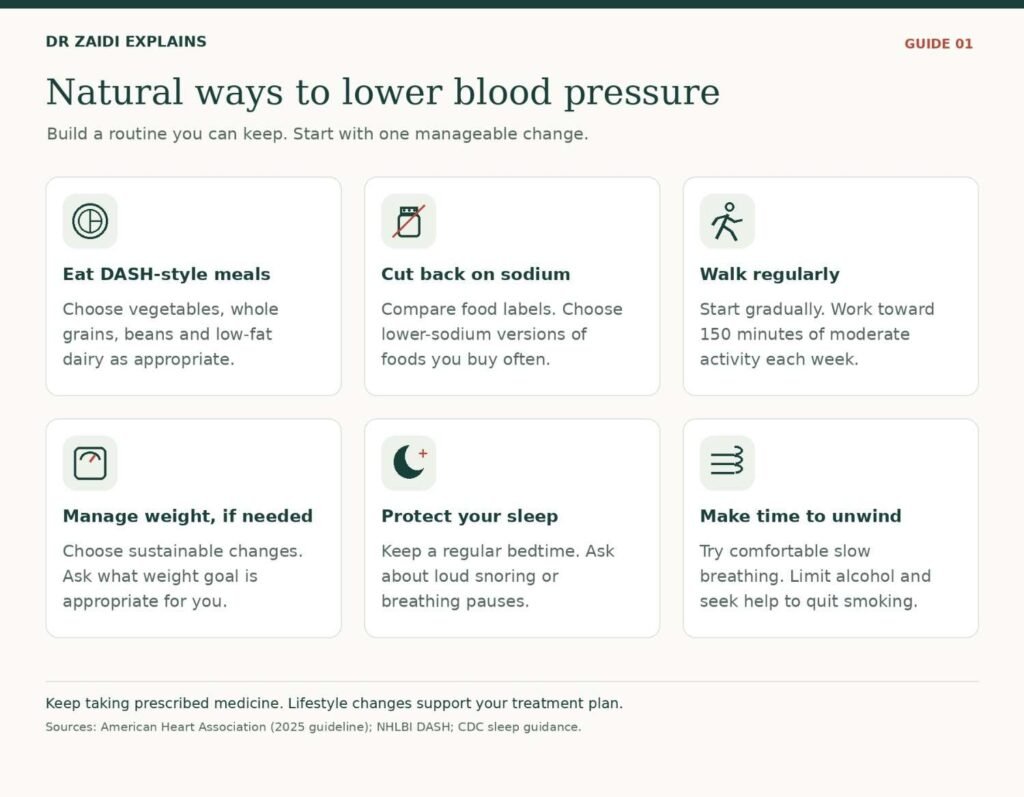
The best-supported natural ways to lower blood pressure include a DASH-style diet, less sodium, regular exercise, and weight loss when appropriate. Limiting alcohol and managing stress can help too. These habits work alongside prescribed treatment, and their effects vary between people.
I’d start with a manageable daily change and a reliable record of your readings. That gives you something useful to discuss at your next appointment.
Get urgent help when needed: For adults who aren’t pregnant, blood pressure above 180 systolic and/or 120 diastolic with chest pain, shortness of breath, weakness, vision changes, or difficulty speaking needs emergency care. Call 911 in the U.S. Don’t wait for a home remedy to work.
Without those symptoms, wait at least 1 minute and measure again. If it’s still that high, contact your healthcare professional immediately. Pregnancy and the postpartum period need separate advice; seek prompt maternity care for high readings or concerning symptoms
1. How to lower blood pressure naturally through daily habits
Start with the habits that fit your routine. You can build from there.
| Habit | A practical first step | What to keep in mind |
|---|---|---|
| DASH-style eating | Add vegetables and beans to a familiar meal | The overall eating pattern matters |
| Less sodium | Compare 2 versions of a food you buy often | Check serving sizes as well as sodium |
| Regular walking | Put a short walk on your calendar | Build up gradually |
| Weight management, if appropriate | Choose one sustainable food or activity change | Avoid crash diets |
| Better sleep habits | Keep a consistent bedtime | Report snoring and breathing pauses |
Follow a DASH-style eating pattern
DASH stands for Dietary Approaches to Stop Hypertension. It includes vegetables, fruit, whole grains, beans, nuts, and low-fat dairy, with suitable portions of fish or poultry.
You can use familiar foods. Try oats with plain yogurt for breakfast, a lentil dish with vegetables at lunch, or fish with brown rice at dinner.
Pay attention to how those foods are prepared. A bean dish can contain plenty of sodium if you add salty stock cubes and bottled sauces.
The National Heart, Lung, and Blood Institute describes DASH as a flexible eating plan. Your portions should suit your energy needs and any medical dietary restrictions.
Reduce sodium in foods you eat often
A common target is no more than 2,300 milligrams of sodium daily, with 1,500 milligrams an ideal goal for most adults. Your clinician can help set a suitable target.
Packaged foods and restaurant meals account for much of the sodium Americans eat. Bread, soup, deli meats, and sauces can add up across the day.
Read the amount per serving. A soup labeled 700 milligrams per serving supplies 1,400 milligrams if you eat 2 servings.
Compare brands, choose no-salt-added options where practical, and try lemon, garlic, or spices for flavor. Salt and sodium aren’t interchangeable measurements, so use the sodium figure on the nutrition label.
Get potassium from food when it’s safe for you
Potassium helps your body handle sodium and supports blood vessel function. Foods such as beans, potatoes, yogurt, and certain fruits can contribute to your intake.
Check before increasing potassium if you have kidney disease or take medicines that affect potassium levels. Some people can develop dangerously high levels, even from ordinary dietary intake.
The same caution applies to potassium supplements and potassium-based salt substitutes. Bring the product label to your pharmacist or clinician before using one.
Does walking lower blood pressure?
Yeah. Walking regularly can reduce your blood pressure, especially if it is part of a regular aerobic exercise routine. The American Heart Association recommends at least 150 minutes of moderate-intensity aerobic activity weekly.
That could mean 30 minutes on 5 days. If that feels too much, begin with 10 minutes at a comfortable pace and gradually add time.
Choose a repeatable slot, perhaps after lunch or before your evening shower. A walking plan that fits your day is easier to keep.
Ask your clinician about exercise if you have heart disease, symptoms with activity, or severely uncontrolled blood pressure. Don’t use a brisk walk to treat a dangerously high reading.
Work toward a healthy weight, if needed
Weight loss can lower blood pressure in people with overweight or obesity. The response varies, and you don’t need to reach a final goal weight before seeing benefits.
Choose a change you can maintain, such as adjusting portions or replacing a routine sugary drink. If weight management is appropriate, discuss a realistic target with your healthcare professional.
Address alcohol, sleep, stress, and smoking
Cutting back on alcohol can help blood pressure. If you don’t drink, there’s no reason to start for heart health.
Protect your sleep time too. Most adults need at least 7 hours nightly, and poor sleep is linked with high blood pressure. Loud snoring, waking up gasping, or persistent daytime sleepiness deserves a conversation about sleep apnea.
Breathing slow and comfortably or quiet daily break can help with stress management. Keep taking the medications prescribed for you and ask for help to stop smoking, which will also reduce your overall risk of cardiovascular disease.
2. Eggs and drinks: everyday choices that raise questions
Are eggs bad for high blood pressure?
Eggs can fit into a heart-healthy eating pattern. Having high blood pressure doesn’t automatically mean you must remove them from your diet. Your cholesterol levels and overall food choices also matter.
Consider the whole breakfast. Bacon, sausage, salty sauces, and generous butter portions change the meal’s nutritional profile.
| Breakfast choice | A practical adjustment |
|---|---|
| Eggs with bacon and sausage | Try an egg with vegetables and whole-grain toast |
| Scrambled eggs with plenty of butter | Use a modest amount of unsaturated oil |
| Eggs covered in salty sauces | Try pepper, herbs, or chopped tomato |
If you have high LDL cholesterol or other cardiovascular conditions, ask how eggs fit your individual eating plan. Egg whites are another protein option.
What drink calms down blood pressure?
No drink reliably treats a dangerously high blood pressure reading. For everyday meals, water is a useful choice, especially when it replaces sugary drinks or alcohol. Follow any fluid limit prescribed for heart or kidney disease.
Unsweetened low-fat milk can fit a DASH-style diet if you tolerate it. Check plant-based alternatives for added sugar and nutritional differences.
Hibiscus tea has been studied for blood pressure. A research review found possible benefits, but results varied substantially and questions remain about dose and duration.
Treat concentrated herbal products cautiously, particularly if you take medication. A cup of tea and a high-dose extract can contain very different amounts of active ingredients.
I’d choose a daily drink based on the whole eating plan and any medical restrictions. Promises that a drink will “flush out” hypertension deserve skepticism.
3. Vitamins, supplements, and herbs for blood pressure
Supplement labels can make shopping feel like choosing a treatment. Before buying anything, check the evidence and whether the ingredients interact with your medicines.
What vitamin helps bring blood pressure down?
No vitamin is established as a reliable general treatment for hypertension. Treating a diagnosed deficiency may be appropriate, but it doesn’t guarantee a meaningful fall in blood pressure.
Vitamin D is a common example. NIH describes mixed findings from blood pressure studies, and several analyses have found no significant benefit from supplementation.
Potassium and magnesium are minerals. They’re often mentioned in discussions about blood pressure, which can make the vitamin question confusing.
Use supplements for a specific clinical reason, with advice about dose and follow-up. Taking more than you need can cause harm.
What is the best supplement for lowering high blood pressure?
There’s no single best supplement for everyone with hypertension. Research on products such as garlic preparations and omega-3 supplements suggests possible benefits, but the evidence and effects vary.
NCCIH reports that no dietary supplement has demonstrated effects comparable to medicines used to treat hypertension. Supplements shouldn’t replace prescribed treatment.
| Product | What to understand before using it |
|---|---|
| Potassium | Kidney function and medicines can make extra potassium unsafe |
| Vitamin D | A deficiency may need treatment; blood pressure benefits are uncertain |
| Garlic preparations | Studies use specific preparations, and much of the evidence is preliminary |
| Omega-3 supplements | Possible blood pressure effects don’t establish a universal need to take them |
Bring a list or photos of everything you take to your appointment. Include powders, gummies, teas, and products labeled “heart support.”
What herb brings down high blood pressure?
Garlic preparations and hibiscus have shown possible blood pressure effects in research. The findings don’t establish a dependable herbal treatment for everyone.
Dose, preparation, and study quality matter. Research on a measured extract doesn’t tell you exactly what will happen after eating a clove of garlic or drinking a homemade tea.
Cooking with herbs can also help you enjoy food with less added salt. Ask a pharmacist about interactions before taking concentrated herbal products.
What are the 5 supplements to avoid if you have high blood pressure?
Five products that deserve particular caution are ephedra, bitter orange, licorice root containing glycyrrhizin, ginseng, and yohimbe. They can raise blood pressure or cause other problems.
| Supplement | Main concern |
|---|---|
| Ephedra, also called ma huang | Can raise blood pressure; avoid using it for weight loss or energy |
| Bitter orange | May raise blood pressure, including in stimulant-containing products |
| Licorice root with glycyrrhizin | Can cause serious cardiovascular effects, especially in susceptible people |
| Ginseng | May raise blood pressure and interact with medicines |
| Yohimbe | Has been linked with high blood pressure, fast heartbeat, and serious adverse effects |
This list isn’t exhaustive. Risks depend on the product and your health history, and “natural” on a label doesn’t establish safety.
Have a pharmacist review weight-loss blends and energy supplements, especially when the label contains several stimulants or unfamiliar ingredients.
4. What should I take daily for high blood pressure?
Take the blood pressure medicine prescribed for you, on the agreed schedule. Your treatment depends on your usual readings, cardiovascular risk, other conditions, and response to previous treatment.
Some people can initially manage their blood pressure with lifestyle changes and monitoring. Others need medication alongside those changes, sometimes using more than one medicine.
If side effects or cost make daily treatment difficult, tell your clinician. Ask about alternatives rather than skipping doses without advice.
Keep a written medication list and bring your home readings to appointments. Don’t stop treatment because a few readings look better; the improvement may mean the treatment is working.
5. What are some home remedies for lowering blood pressure quickly?
There’s no dependable home remedy for safely treating a dangerous blood pressure spike. Avoid taking extra medication, concentrated supplements, or large amounts of water unless a clinician has specifically directed you to do so.
For an unexpectedly high reading without emergency symptoms, check your measurement technique and follow the urgent-care advice near the top of this page.
What can I do to lower my blood pressure in 5 minutes?
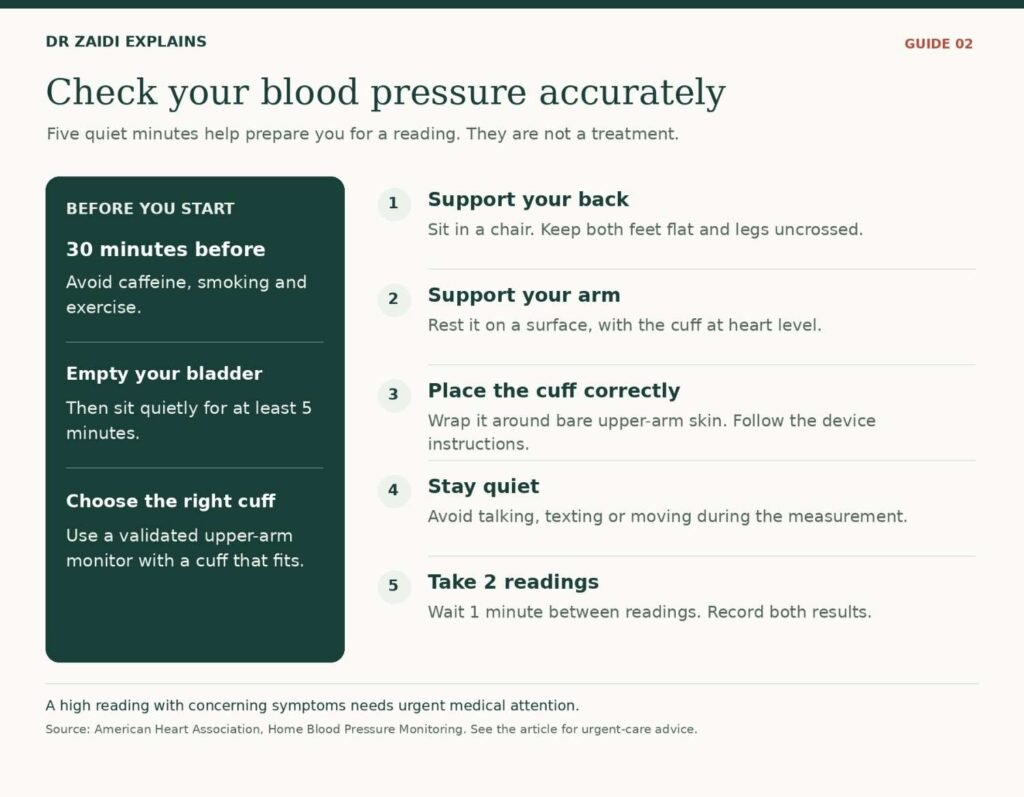
Sitting quietly for 5 minutes can help you obtain a more accurate reading. It can allow a temporary stress-related rise to settle, but it doesn’t guarantee your pressure will fall.
For a routine home measurement:
- Sit with your back supported and both feet flat on the floor.
- Rest your arm on a surface, with the cuff at heart level.
- Place a correctly sized upper-arm cuff on bare skin.
- Stay quiet and avoid talking or checking your phone.
- Take 2 readings, 1 minute apart, and record both.
Avoid smoking, caffeine, and exercise for 30 minutes beforehand, and empty your bladder. A validated upper-arm monitor is generally recommended.
If the first reading is high and the second is lower, keep both results. A repeated pattern is useful information for your clinician.
If first blood pressure reading is high and second one is low, read our in detailed guide why this occurs
6. Frequently asked questions about lowering blood pressure
How long do natural ways to lower blood pressure take to work?
Some dietary changes can affect blood pressure within weeks. DASH-Sodium research measured benefits during month-long feeding periods, but your response depends on your starting pressure and the changes you maintain.
Track readings consistently and agree on a review date with your clinician. Don’t delay needed treatment while waiting for a lifestyle change to work.
Can I lower blood pressure without medication?
Some people can, particularly when their blood pressure and overall risk allow a monitored lifestyle trial. Others need medication from the start. Your clinician should make that decision using repeated measurements and your medical history.
Should I stop blood pressure medicine once my readings improve?
Keep taking it unless your prescriber changes the plan. The improved readings could be a result of the combined effects of medication and healthier habits, and any reduction in dosage needs supervision.
If I am at a healthy weight, do I need to lose weight?
Further weight loss may be unnecessary. Focus on suitable eating habits and regular activity, and ask your clinician which changes are most relevant to you. Weight-loss recommendations for blood pressure mainly concern people with overweight or obesity
7. A seven-day plan to start lowering blood pressure naturally
Use this first week to build a routine. Your blood pressure may need longer to change, and follow-up still matters.
| Day | One task |
|---|---|
| 1 | Check your monitor and cuff fit; begin recording readings on the schedule your clinician recommends |
| 2 | Compare sodium labels on 2 foods you buy regularly |
| 3 | Prepare one DASH-style meal using familiar ingredients |
| 4 | Add a short walk if exercise is suitable for you |
| 5 | Check your bedtime routine and note any sleep apnea symptoms |
| 6 | List your medicines and supplements for a pharmacist review |
| 7 | Review what felt manageable and arrange follow-up for persistent high readings |
Natural ways to lower blood pressure work best as habits you can maintain. Begin with one food change and a realistic activity plan, alongside any prescribed treatment.
Your next step: Record your readings and take them, with your medication list, to your next appointment. Ask what blood pressure target and follow-up schedule are right for you.
Sources
- 2025 AHA/ACC guideline for high blood pressure in adults
- American Heart Association: When to call 911 about high blood pressure
- NHLBI: DASH eating plan
- American Heart Association: How much sodium should I eat per day?
- American Heart Association: Potassium and blood pressure
- NIH Office of Dietary Supplements: Potassium
- American Heart Association: Getting active to control high blood pressure
- CDC: Sleep and heart health
- NHLBI: Living with sleep apnea
- NHLBI: Living with DASH
- American Heart Association: Protein and heart health
- Research review: Hibiscus and blood pressure
- NIH Office of Dietary Supplements: Vitamin D
- NCCIH: Complementary health approaches for hypertension
- NCCIH: Hypertension and complementary approaches
- NCCIH: Licorice root
- NCCIH: Yohimbe
- American Heart Association: Home blood pressure monitoring
- NHLBI: Health benefits of DASH
- American Heart Association: Managing blood pressure medicines
- ACOG: Preeclampsia and high blood pressure during pregnancy